
Virtual Assistants For Medical Practices
Dedicated virtual medical assistants helping your practice reduce overhead, streamline operations, and improve patient care.


Response
We place certified virtual team members as an extension of your practice.

Patient Experience
Keep clinical staff focused on care while admin work runs smoothly in the background.

by Role
Add virtual staff based on workflow demand, not headcount limitations.

Processes
Virtual staff work inside your systems with role-based access and defined workflows.

Certified Virtual Medical Staffing Solutions for Modern Healthcare Practices
Growing your medical practice is demanding work. As patient volume increases, the operational load rises right alongside it. That means more calls, more messages, more scheduling coordination, and more billing, insurance, and documentation requirements. Even with a strong in-house team, growth can pull staff in multiple directions throughout the day. Expanding your medical practice should never come at the expense of patient experience, clinical focus, or continuity of care.
By augmenting your team with virtual medical staff, you keep daily operations running smoothly. Physicians and on-site teams are able to stay focused on patient care and clinical decision-making. Virtual medical staff can own the repetitive workflows that slow down front desk support, patient communication, intake coordination, insurance processes, billing support, scribing, and referral management. Staffing For Doctors provides certified, role-based virtual staffing that integrates into your system and scales as demand increases. With clear task ownership, role-based access, and HIPAA-aligned processes, patient information is handled responsibly from day one. The result is a more responsive, organized medical practice that supports patients efficiently and consistently.
Virtual staffing gives your medical practice the flexibility to scale on your terms. You can expand support by role and by need, without taking on the overhead of additional in-house hires or disrupting existing workflows. When you are ready to strengthen operations, improve patient communication, and scale affordably, schedule a consultation with Staffing For Doctors to see how virtual medical staffing can support your practice. Call us now at (833) 503-1289.

The Best Roles for Virtual Medical Assistants
The fastest way to protect patient experience and clinical focus is to strengthen the workflow that supports every visit. The best roles for virtual medical staffing are process-driven, repeatable, and tied to outcomes your team can measure, like faster response times, smoother scheduling, cleaner documentation, and consistent follow-through. Staffing For Doctors helps you match each role to your system, then onboard seamlessly. The roles below are ideal for virtual medical staffing because they eliminate back-office work for your in-house staff, which lets you put the focus on patient care.

Virtual Medical Receptionist
A virtual medical receptionist is a strong fit when your front desk needs consistent coverage for calls, messages, and appointment coordination throughout the day. This role supports a smoother first impression for patients and helps your office respond promptly across high-volume communication channels. It also allows your on-site team to stay focused on in-person patient interactions without juggling constant phone interruptions.
Virtual Front Desk Support for Medical Calls, Scheduling, and Patient Messages
Responsiveness builds trust in a healthcare practice. A virtual receptionist helps your office answer patient questions, handle requests efficiently, and guide patients toward clear next steps. Over time, consistent front desk support helps your practice feel more organized and more accessible.
Call Routing and Patient Triage for Primary Care Medical Offices
A virtual receptionist follows clear routing rules so clinical questions and urgent issues reach the right staff member quickly. Patients receive faster answers and less back-and-forth. This supports continuity while protecting clinical team bandwidth.
Virtual Staffing Documents Standards for Medical Patient Requests
Clear documentation reduces repeated conversations and helps teams stay aligned. A virtual receptionist records outcomes and next steps in your system so every patient request is trackable. This keeps communication consistent and helps staff follow through with confidence.
Appointment Confirmations and Reminder Workflows for Medical Practices
Consistent confirmations and reminders make visits smoother for patients and teams. A virtual receptionist can run a predictable cadence for appointment reminders based on your practice standards. This improves preparedness and keeps the schedule running efficiently.
Support for New Patient Intake and Scheduling Logistics
New patient scheduling often requires extra guidance and a clear process. This role can help patients understand next steps, required forms, and what to expect before their visit. The result is a more organized intake experience.
Waitlist Management and Rescheduling Support For Your Medical Practice
A structured waitlist helps your practice fill openings and reduce schedule disruption. Patients who want earlier availability can be contacted quickly and guided through rescheduling. This keeps scheduling flexible and patient-friendly.
Virtual Medical Administrative Assistant
A virtual administrative assistant supports the behind-the-scenes work that keeps medical offices consistent, organized, and efficient. This role is ideal when tasks like documentation handling, inbox triage, and coordination start competing with patient-facing responsibilities. It also helps medical office managers reduce task switching and keep daily operations running smoothly.
Medical Office Administrative Support for Daily Workflow Coordination
As patient volume increases, administrative tasks multiply across departments. A virtual assistant creates structure by managing checklists, tracking routine updates, and keeping information organized. This helps the practice move faster without sacrificing accuracy.
Medical Forms, Records, and Document Handled By Virtual Staff
This role can organize documents, support forms processing, and help maintain records according to your office standards. It can also monitor routine administrative queues and flag items that need attention. Over time, this reduces bottlenecks and improves consistency.
Inbox Triage and Internal Task Tracking for Medical Teams
Inbox volume often grows faster than staff capacity. A virtual admin assistant can triage messages, route requests, and track internal action items so follow-through stays consistent. This supports clearer handoffs across the team.
Scalable Administrative Workflows for Growing Medical Practices
Administrative support scales well because responsibilities can be layered as needs evolve. Practices can start with task execution, then add coordination and reporting as operations become more complex. This keeps growth organized and controlled.
Reporting and Workflow Visibility for Medical Office Managers
Clear task tracking helps office managers see what is pending and what has been completed. This reduces the need to chase updates across teams. Visibility improves accountability without adding friction.
Consistent Standards for Routine Administrative Processes
Consistency reduces rework and improves patient experience indirectly. When standard processes are followed reliably, teams spend less time correcting small issues. This supports smoother operations over time.
Virtual Billing Assistant for Medical Practices
A virtual medical billing assistant is ideal when your practice wants billing workflows to run consistently as patient volume increases. This role supports the revenue cycle by maintaining cadence across billing tasks and documentation. It also helps your in-office billing lead stay focused on higher-skill decisions while routine follow-up stays organized.
Virtual Medical Billing Support for a Stronger Revenue Cycle
Billing efficiency impacts cash flow and patient clarity. A virtual billing assistant helps keep billing tasks moving by organizing queues, documenting progress, and flagging exceptions early. This consistent rhythm helps reduce backlog.
Claims Follow-Up and Medical Billing Workflow Virtual Support
This role can support claim status checks, routine follow-up, and documentation organization based on your established process. It can also help maintain billing notes so next steps are clear. Consistency helps reduce rework over time.
Payment Posting and Patient Statement Support
Billing support often includes posting payments and supporting statement workflows. When those tasks are handled consistently, patient balances are managed more clearly. This improves office organization and patient communication.
Insurance Verification and Documentation Support for Medical Billing
Billing runs smoother when insurance details and documentation are complete. A virtual billing assistant can coordinate verification steps and ensure required information is in place before claims move forward. This supports a more predictable workflow.
Reduce Rework With Cleaner Insurance Documentation
Missing information often leads to extra follow-up and delayed processing. This role helps ensure required items are gathered and organized early. Cleaner documentation reduces avoidable back-and-forth.
Workflow Coordination Between Front Desk and Billing Teams
Billing is strongest when teams work in sync. Virtual support helps ensure handoffs are clean and information is complete. Coordination improves efficiency across the practice.
Virtual Medical Scribe
A virtual medical scribe is ideal for practices that want documentation support without pulling providers away from patient care. This role helps maintain consistent charting and organizes clinical documentation workflows. It also supports continuity by reducing variability across provider notes.
Virtual Clinical Documentation Support for Provider Efficiency
A virtual scribe helps providers stay focused on the patient while documentation is completed consistently. Notes follow your templates and preferred structure. This supports a cleaner clinical workflow.
Visit Documentation and Chart Note Assistance Done By Virtual Medical Office Staff
This role supports chart note creation using your templates and documentation standards. It can organize follow-up items so next steps are clear for the clinical team and the patient. Consistency improves record usability over time.
Provider Review Cadence and Documentation Workflow Alignment
Scribing works best when expectations are defined, including what is documented, where it goes, and who approves it. The practice sets a review cadence so providers stay confident notes reflect clinical intent. Once that process is set, documentation support becomes a steady extension of care delivery.
HIPAA-Aligned Documentation Practices With Role-Based Access For Virtual Staff
Clinical documentation involves sensitive information and requires consistent standards. Virtual scribes are onboarded with role-based access and clear documentation expectations. This supports responsible handling of patient information.
Standard Templates and Structured Note Formatting
Structured templates improve clarity and reduce missing information. Virtual scribes can align notes with your established format. This supports consistent documentation quality.
Clear Access Controls for Clinical Documentation Support
Permissions are limited based on role needs. This reduces risk while still allowing the scribe to support documentation workflows. Role-based access supports secure integration.
Virtual Medical Surgery Scheduler
A virtual medical surgery scheduler is a strong fit for practices that want tighter coordination around procedures and high-value appointments. This role supports communication, preparation, and follow-through so scheduling steps stay organized. It also helps patients feel guided and informed before their procedure.
Procedure Scheduling and Pre-Op Coordination for Medical Practices
Procedure scheduling involves more than selecting a time slot. A virtual scheduler tracks steps, communicates requirements, and supports readiness checks. This creates a smoother process for patients and staff.
Pre-Op Instructions and Patient Communication Support
Patients appreciate clear guidance and timely reminders. This role can ensure instructions are communicated consistently and questions are routed correctly. Consistent communication improves preparedness.
Coordination of Forms, Clearances, and Scheduling Requirements
Schedulers can track required documents and readiness steps based on your workflow. Clear tracking prevents last-minute confusion. The result is a more organized procedure pipeline.
Reduce Procedure Schedule Disruptions With Readiness Checks
Readiness checks help protect high-value calendar time. A virtual scheduler can confirm required steps and reinforce expectations ahead of time. This supports fewer day-of surprises.
Confirmations and Timeline Tracking for Procedure Appointments
Consistent confirmations help ensure patients and teams stay aligned. Timeline tracking supports better preparation. This improves scheduling reliability.
Escalation Rules for Clinical Questions and Urgent Changes
Not every request belongs at the front desk. Clear escalation rules ensure clinical questions and urgent changes reach the right team member quickly. This protects clinical time while supporting patient confidence.
Virtual Medical Patient Coordinator
A virtual medical patient coordinator is ideal for practices that want stronger follow-up and clearer communication across ongoing care. This role supports consistent touchpoints that help patients stay engaged. It also helps practices maintain organized coordination without relying on spare moments between visits.
Patient Follow-Up and Virtual Care Coordination Support for Medical Practices
Patients often need reminders and clarity on next steps. A coordinator makes follow-up consistent and patient-friendly. This supports a smoother care journey.
How Virtual Medical Office Staff Handles Appointment Follow-Up and Patient Outreach Workflows
This role can manage follow-up outreach using your scripts and standards. It documents outcomes and escalates clinical questions appropriately. Consistent outreach supports stronger patient trust.
Care Plan Coordination and Next-Step Communication
Clear next steps reduce confusion for patients. A coordinator helps ensure instructions and scheduling steps are communicated consistently. This supports continuity across the practice.
Improve Patient Experience With Consistent Communication
Communication standards shape patient confidence. A virtual coordinator supports consistency across reminders, follow-ups, and coordination touchpoints. Patients feel supported and guided.
Reduce Medical Patient Friction With Clear Expectations Set By Virtual Staff
When patients know what to expect, visits run smoother. Coordinators reinforce timelines, preparation steps, and next actions. This improves the overall patient experience.
Close Communication Loops With Documented Outcomes
Documented outcomes keep teams aligned. This reduces repeated conversations and missed follow-ups. Patient requests feel handled and organized.
Virtual Medical Referral Coordinator
A virtual referral coordinator is a strong fit for practices that want referral workflows to feel controlled, trackable, and easy for patients. This role supports consistency from intake through closure. It also strengthens coordination with partner offices through organized communication.
Referral Intake and Referral Tracking for Medical Practices
Referral workflows break down when tracking and follow-up are inconsistent. A coordinator creates accountability by tracking each referral step and keeping status notes updated. This reduces disruption for the team.
Referral Documentation and Partner Office Communication
This role manages referral intake, document handling, and communication with partner offices based on your workflow. It can request missing items and confirm appointments are scheduled. Consistent communication helps referrals move smoothly.
Status Updates and Patient Communication for Referrals
Patients appreciate knowing where things stand. A coordinator can provide updates and keep expectations clear. This supports a better experience.
Close the Loop on Medical Office Referrals With Clear Outcomes
A referral is not complete until outcomes are confirmed and documented. This role ensures final steps happen consistently. Better closure improves visibility and reduces follow-up cleanup.
Reduce Follow-Up Burden With Organized Referral Workflows
Organized referral tracking reduces the need to recheck details repeatedly. The team gains time back and workflows feel more controlled. This supports smoother daily operations.
Improve Coordination Across Departments and Partner Providers
Referrals often touch multiple teams. A virtual coordinator helps keep communication aligned so handoffs are clean. This supports stronger relationships and better continuity of care.
How Virtual Medical Assistants Keep Your Schedule Full and Your Patients Happy
A full schedule and a strong patient experience are built on the same operational habits, clear communication, consistent follow-through, and workflows that move quickly from request to resolution. When scheduling, reminders, intake coordination, and patient updates are handled with a steady rhythm, your practice stays organized and patients feel supported at every touchpoint. Virtual staffing strengthens these day-to-day processes without changing how care is delivered, it simply gives your team more capacity to execute the work that keeps patients engaged. The benefits below focus on the process advantages that help medical practices stay responsive, protect appointment availability, and maintain a smooth patient journey.
Reduce Staffing Costs With Virtual Medical Assistants
Virtual medical assistants help practices expand operational coverage in a cost-efficient way as demand increases. Because support is flexible by role and by workflow, practices can add capacity sooner and keep front office and back office processes running consistently. That stability supports patient satisfaction and helps the schedule stay strong as volume grows.
Save Up to 60% Compared to Hiring In-Office Medical Office Staff
Lower staffing cost makes it easier to build coverage around the hours and channels your patients actually use. Practices can strengthen phones, scheduling, documentation, and follow-up without taking on the full expense of additional on-site headcount. This approach supports smarter staffing decisions while keeping operations steady.
Keep Staffing Spend Predictable as Patient Volume Increases
A predictable staffing model helps practices plan around provider schedules, seasonal demand, and growth initiatives. It also allows you to adjust support when a workflow needs more coverage without reshuffling the entire office. That flexibility keeps the practice running smoothly as demand changes.
How Virtual Assistants Boost Retention in Medical Practices
Retention improves when teams have reliable support and patients experience consistent communication. Virtual assistants add stability by owning defined workflows, learning your standards, and helping the office run with fewer disruptions. When operations feel organized and predictable, staff satisfaction increases and patients feel more confident returning to your practice.
Keep Your Team and Patients Longer With Consistent, Reliable Support
Consistency builds trust over time, both internally and with patients. When the same workflows are handled the same way each day, teams spend less time re-explaining processes and patients spend less time waiting for answers. That stability supports better relationships and a calmer day-to-day rhythm.
Reduce Operational Friction With Clear Ownership and Follow-Through
Clear ownership prevents requests from bouncing between team members. Virtual support helps maintain a steady cadence for reminders, updates, and next steps so follow-through is consistent. Patients experience a practice that feels dependable, and staff benefit from fewer last-minute scrambles.
Why Dedicated Virtual Assistants Help Your Medical Practice Grow
Dedicated virtual assistants focus on your practice, your systems, and your service standards. That focus improves execution because the assistant is not splitting attention across multiple offices. Over time, dedicated support feels integrated into your team and helps the practice scale with more control.
A Virtual Assistant Fully Focused on Your Medical or Primary Care Practice
Dedicated staffing allows your virtual assistant to learn your workflows deeply and operate with confidence. Familiarity reduces the need for rechecking details, re-explaining expectations, or correcting preventable mistakes. This creates smoother operations and a more consistent experience for patients across every touchpoint.
Build Repeatable Patient Communication Standards Across Your Office
Patients appreciate consistent messaging, clear timelines, and predictable next steps. Dedicated support helps maintain your tone across confirmations, reminders, and follow-up communication. That consistency strengthens patient trust and supports a more professional brand experience.
Virtual Medical Office Staff Improves and Streamlines Workflows
Medical practices run best when administrative workflows are structured, trackable, and easy for teams to follow. Virtual medical office staff support this by handling repeatable tasks with documented outcomes and clear handoffs. Streamlined workflows reduce delays and help the patient journey feel more organized from start to finish.
Free Your Team From Administrative Task Switching
When routine workflows are handled consistently, on-site staff can focus on patient-facing service and higher-value responsibilities. Virtual support reduces task switching by owning defined processes and completing them with a steady cadence. This creates more operational capacity without adding complexity to the day.
Reduce Delays With Cleaner Handoffs and Better Documentation
Clear documentation and consistent handoffs prevent missed steps that create downstream delays. Virtual staff can keep task queues moving, document outcomes, and flag exceptions using your established process. The result is smoother execution that supports patient satisfaction and schedule stability.
Save More By Skipping Recruiter Fees for Medical Office Staffing
Recruiting and placement costs can add up quickly, especially when practices are growing. Virtual staffing supports a more efficient path from role definition to onboarding, without the same recruiting expense profile. This helps your staffing plan stay lean while your operations scale.
No Placement Costs and Lower Turnover-Related Hiring Expenses
A more efficient hiring model helps practices maintain momentum as needs change. Instead of pausing for long recruiting cycles, practices can focus on selecting a fit and integrating quickly into established workflows. That continuity supports better patient communication and a steadier schedule.
Hire Faster With a Vetted Candidate Pipeline
A consistent pipeline makes it easier to staff roles when demand increases. Faster staffing decisions help protect responsiveness and keep patient requests moving. That speed supports both patient satisfaction and schedule performance.
Respond to dental patient inquiries outside normal business hours
Patients often reach out after work, on weekends, or between appointments. Faster responses can be the difference between winning the booking or losing the patient to another practice. Virtual support helps ensure patient inquiries are acknowledged promptly and routed correctly.
Reduce dental no-shows with consistent reminders and confirmations
Consistent reminders, confirmations, and follow-ups support schedule stability. Patients feel more informed and supported, which improves preparation and attendance. That reliability protects chair time and helps the practice run on time.
Ensure Faster Support for Patients With Virtual Medical Staff
Patients value quick, clear communication, especially when they are scheduling care or trying to understand next steps. Virtual staffing improves responsiveness by expanding coverage for calls, messages, and follow-up workflows. Faster support helps patients feel cared for and helps the practice maintain scheduling momentum.
Faster Response Times and Better Patient Communication
When responses are timely, patients are more likely to schedule, show up prepared, and stay engaged in care. Virtual staff help ensure patient requests are acknowledged quickly and routed appropriately. That reliability strengthens patient confidence and supports a smoother daily schedule.
Improve Scheduling Momentum With Prompt Follow-Up
Follow-up keeps appointments moving from inquiry to confirmed visit. Virtual support helps maintain a consistent rhythm for confirmations, reminders, and next-step communication. That cadence supports fewer gaps and more predictable scheduling.
Virtual Staff Helps Medical Practices Scale Without Increased Overhead
Fully remote staffing helps practices expand support without adding physical space, additional workstations, or major office changes. This keeps growth efficient while preserving a calm, patient-friendly environment. When staffing scales without crowding the practice, daily flow stays smoother for both teams and patients.
Fully Remote Medical Staff Integrated Into Your Existing Systems
Virtual staffing works best when integration is seamless. Your virtual team operates inside your established tools and workflows, following your documentation standards and handoff rules. This makes support feel like a natural extension of the practice, not an extra layer to manage.
Scale Support Without Adding Desks, Phones, or Office Buildouts
Remote staffing makes it easier to add role-based coverage without changing your footprint. This is especially helpful as practices expand provider schedules, extend hours, or add services. You gain capacity while keeping overhead under control.
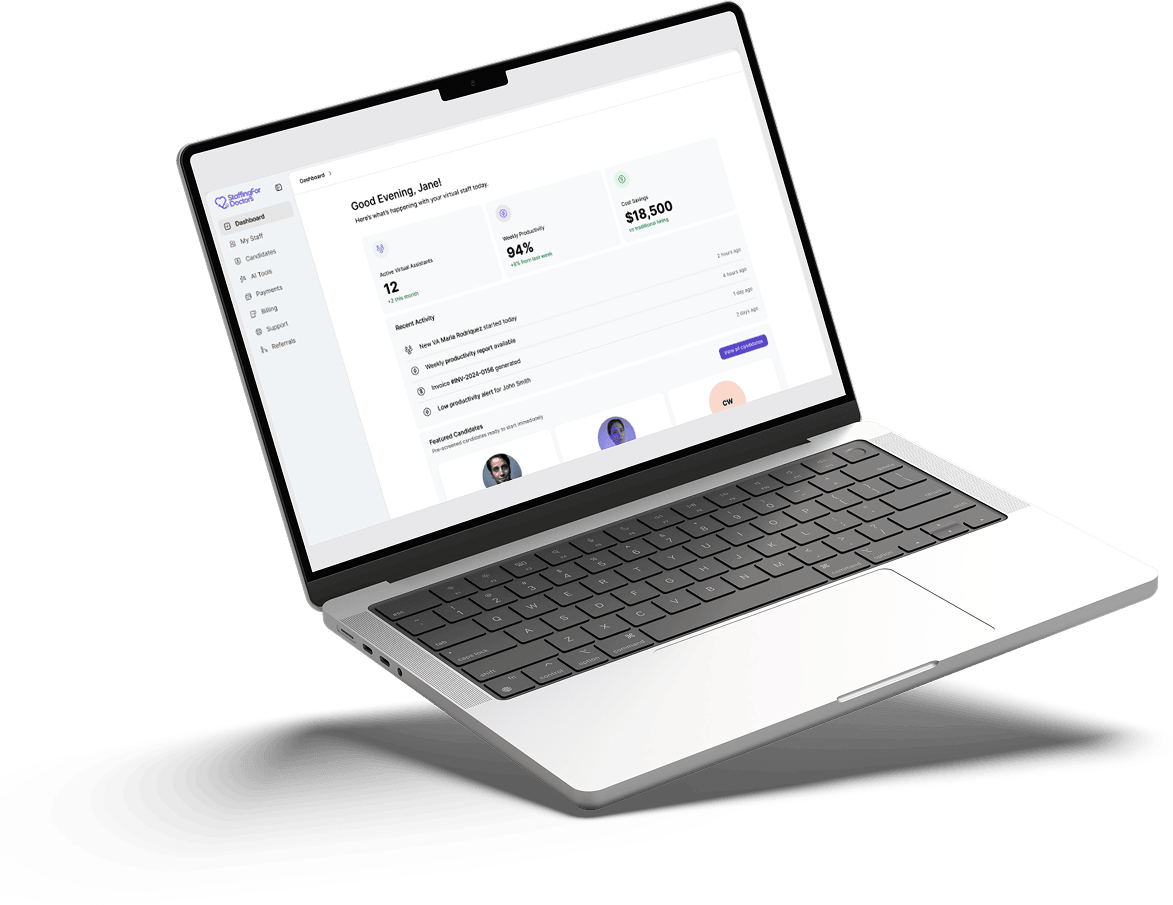



Manage Virtual Medical Staff Seamlessly With Our Custom Dashboard
As medical practices grow, visibility and control become just as important as staffing itself. The Staffing For Doctors dashboard gives physicians, practice managers, and administrators a centralized place to manage virtual medical staff, candidate activity, and day-to-day workflows without adding complexity. Instead of juggling email threads, spreadsheets, and disconnected tools, your team can keep staffing operations organized in one system. This supports smoother patient communication, cleaner scheduling and follow-through, and more consistent back-office execution as patient volume increases.
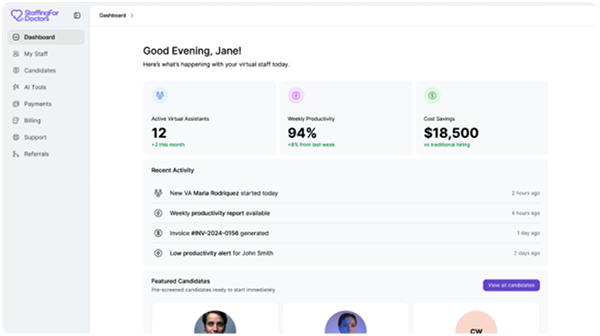
My Staff:
Manage Active Virtual Medical Staff and Role Coverage
The My Staff area provides a clear view of your current virtual team and the dental roles they support across the front desk and back office. This visibility makes it easier to understand who owns each workflow and how responsibilities are distributed. As you expand, that clarity helps prevent missed handoffs and duplicate work.
Role Clarity for Virtual Dental Staffing Workflows
You can align each team member to specific responsibilities like scheduling support, patient follow-up, billing assistance, or documentation. Clear ownership helps your office manager route tasks accurately and keep communication consistent. That structure becomes even more valuable when multiple roles support the same patient journey.
Scalable Oversight for Growing Dental Practices
When you add providers, extend hours, or increase patient volume, your staffing structure can evolve without becoming confusing. A centralized view makes it easier to adjust responsibilities and add support strategically. This keeps scaling organized, controlled, and easy to manage.
Candidates:
Recruit and Interview Virtual Medical Staff Fast
The Candidates area helps medical practices move quickly from staffing need to interview-ready options. Instead of restarti ng the hiring process every time demand increases, you can review vetted candidates aligned with medical office workflows. This reduces hiring delays and supports growth without slowing down operations.
Streamlined Candidate Pipeline for Virtual Medical Staffing
You can review candidate details, compare options, and move into interviews in a structured way. That makes it easier to evaluate fit for roles like virtual medical receptionist, medical billing assistant, patient coordinator, or medical scribe. Better visibility supports faster, more confident staffing decisions.
Make Better Hiring Decisions With Clear Candidate Comparison
Side-by-side visibility helps teams evaluate candidates based on communication, workflow experience, and role fit. It reduces guesswork and speeds up the decision process. This helps practices staff critical roles with more confidence.
Hire at the Pace Your Medical Practice Needs
When patient volume rises or provider schedules expand, timing matters. A consistent candidate pipeline helps you add support when you need it, not months later. That speed protects patient communication and helps keep schedules full.
AI Tools:
Improve Medical Practice Efficiency and Consistency
AI tools inside the dashboard help bring more structure to virtual medical staffing workflows. They support repeatable processes, cut down on busywork, and make it easier to keep quality steady as demand grows. For medical practices, that means day-to-day operations run more smoothly while patients still get a high-touch experience.
Strengthen Patient Communication and Reliable Front-Office Routines
With built-in scripts, templates, and workflow guidance, virtual staff can follow the same playbook across roles. This keeps tone, terminology, and office expectations consistent, even when multiple team members support the same patient from intake through follow-up.
Create Clear, Consistent Messaging for Scheduling and Follow-Up
Standardized messages for booking, reminders, and next-step instructions help patients know exactly what to expect. Templates also reduce missed details and mixed signals, which supports better preparedness and a more dependable experience across the practice.
Payments:
Manage Virtual Medical Staffing Costs Predictably
The Payments area gives medical practices a straightforward way to track virtual staffing costs and payment activity in one place. With more predictability, owners and managers can plan budgets with less guesswork as support scales. Clear visibility also helps avoid unexpected changes and makes staffing decisions easier to manage.
Simplified Payment Management for Virtual Staffing
Centralized billing keeps payment tasks in one workflow instead of scattered across invoices and email threads. You can review charges, confirm what is due, and manage payments without chasing documentation. That keeps finance operations clean and easier to maintain.
Less Administrative Drag in Staffing Operations
A smoother payment process reduces internal follow-ups and unnecessary coordination. Your team can stay focused on patient-facing priorities rather than billing logistics. Over time, this helps keep management overhead lower as staffing expands.
Billing:
Track and Support Medical Billing Workflows
The Billing area is designed for practices that use virtual staff to support billing and insurance workflows. It creates a centralized space to manage billing activity while keeping processes aligned with your internal standards. Strong organization helps prevent missed steps and supports a healthier revenue cycle.
Centralized Oversight for Medical Billing and Insurance Support
A single view into billing tasks allows office managers to monitor progress without micromanaging daily work. It becomes easier to identify exceptions, track follow-ups, and maintain clear documentation. This level of oversight supports consistency across claims handling and insurance workflows.
Improve Billing Workflow Consistency With Clearer Tracking
When billing work is visible and trackable, teams can maintain a steady pace. Backlogs are less likely to build, and small issues are addressed before they create larger delays. Consistent tracking helps keep billing operations predictable and efficient.
Support:
Help for Virtual Medical Staffing and Onboarding
The Support area keeps help available inside the same platform you use to manage virtual medical staff. When you need onboarding direction, workflow changes, or general assistance, you can find it without switching systems. That reduces downtime and helps your office stay on track.
Centralized Support for Practice Staffing Needs
Support is easier to use when it lives in one place. You spend less time hunting for the right contact or sorting through long email threads. Faster access to answers helps keep day-to-day staffing operations organized.
Resolve Staffing Questions Without Disrupting Office Workflows
Responsive support helps keep workflows moving when roles shift, responsibilities change, or new team members are added. That limits delays and helps protect consistency in patient communication, scheduling, and follow-up.
Referrals:
Track Medical Referrals and Support Practice Growth
The Referrals area helps medical practices stay on top of referral activity that impacts both patient experience and long-term growth. With clearer visibility into referral flow, teams can follow through more consistently and reduce avoidable friction for patients and staff. The result is a more organized process from request to outcome.
Referral Tracking for Patient Follow-Through and Practice Growth
Keeping referrals in one centralized view reduces guesswork and scattered updates. Teams can track referral details, monitor outcomes, and stay aligned on next steps without chasing information across systems. This supports stronger continuity throughout the patient journey.
Improve Referral Coordination With Clear Status Updates
Referral workflows run better when status updates are easy to view and maintain. Clear tracking helps prevent missed handoffs and delayed follow-ups. Patients experience a more guided process, and the practice benefits from fewer administrative gaps.

Let Staffing For Doctors Reduce Costs and Improve Patient Care
Staffing For Doctors helps medical practices strengthen day-to-day operations with virtual staffing that is role-based, workflow-aligned, and built for healthcare. You gain reliable support for patient communication, scheduling, documentation, billing workflows, and coordination tasks that keep visits organized and patients informed. With clear task ownership and a structured onboarding approach, virtual staff integrate into your existing systems quickly, so your practice can expand capacity without disrupting care delivery or internal routines.
As your practice grows, virtual staffing gives you the flexibility to scale support by role and by demand while maintaining consistency across patient touchpoints. Cost efficiency, faster responsiveness, and cleaner follow-through help protect your schedule and improve the patient experience across the entire care journey. Staffing For Doctors also supports practices nationwide, so whether you operate a single clinic or manage multiple locations, you can build a scalable staffing model with centralized oversight and dependable coverage. When you are ready to reduce operational costs, improve patient communication, and grow with confidence, schedule a consultation with Staffing For Doctors today. Call (833) 503-1289.
Get reliable, scalable support that transforms your practice operations and patient experience.

Save up to 60% compared to hiring in-office staff.

Keep your team and patients longer with consistent, reliable support.

A virtual assistant fully focused on your practice—no shared staffing.

Fully remote staff integrated into your existing systems.